Best Authors to Read to Improve Vocabulary
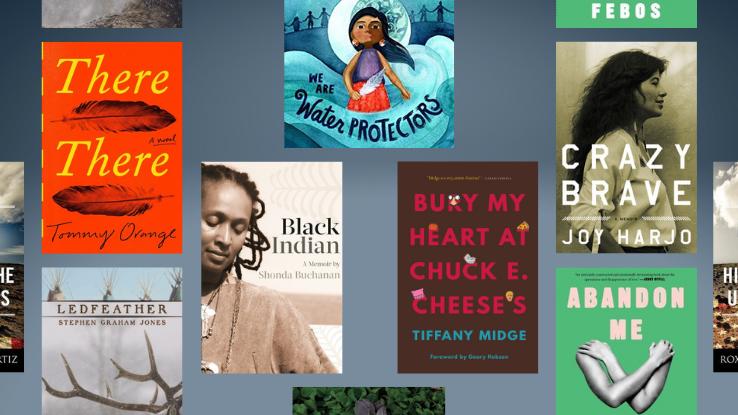
November is Native American Heritage Calendar month and numerous states are participating in this observance. The National Congress of American Indians describes Heritage Month as "an opportune time to educate the general public nearly tribes" as well as an occasion to acknowledge past and present challenges that Indigenous people face. Moreover, Heritage Month highlights how "tribal citizens take worked to conquer these challenges" over the years.
President Joe Biden previously issued a declaration ahead of Indigenous Peoples' Day, and he did the aforementioned at the cusp of Native American Heritage Calendar month. President Biden officially declared "November 2021 as National Native American Heritage Month." Federal support for America's Indigenous population is certainly appreciated, but there are also numerous other ways to show back up.
Attention rallies for Ethnic-led climate justice efforts, supporting the Land Back movement, and providing mutual assist funds to Indigenous-led organizations are also not bad ways to honor Heritage Month. You can likewise educate yourself by reading the works of Ethnic authors and poets. Here, we've compiled a list of must-read works by incredible writers. Of course, self-instruction isn't all about learning history; while understanding history from other perspectives is essential, these works, which range from coming-of-age memoirs to renowned verse collections, capture the varied, nuanced experiences of Indigenous folks living in the present-day United states.
"Crazy Dauntless," "How Nosotros Became Human" & More by Joy Harjo
About likely, you're familiar with Joy Harjo because of her award-winning poesy. In fact, Harjo is serving her 2d term as the 23rd Poet Laureate of the United States — and for good reason. From her acclaimed drove An American Sunrise to How Nosotros Became Homo, Harjo's poetry is essential reading.
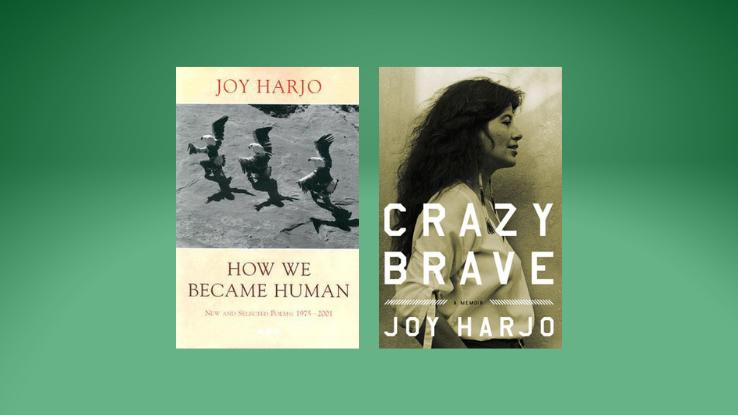
But the talented artist and performer has also penned two incredible memoirs, Crazy Brave and Poet Warrior. "I think the story is the story of a lot of Native people and the story of a lot of women, she says, noting that Crazy Dauntless, in all its raw, brave dazzler, was difficult to write. Informed by tribal myth and beginnings, Harjo's memoir illustrates her journey of becoming a young artist, of reclaiming a lost spirituality and the "intricate and metaphorical language of my ancestors."
You may call back Tiffany Midge's "An Open Letter to White Girls Regarding Pumpkin Spice and Cultural Appropriation," a passage from her memoir, Coffin My Heart at Chuck Eastward. Cheese's. As the championship of this excerpted piece of work suggests, Midge is an incredible humorist — only she doesn't shy away from critique or commentary, either.
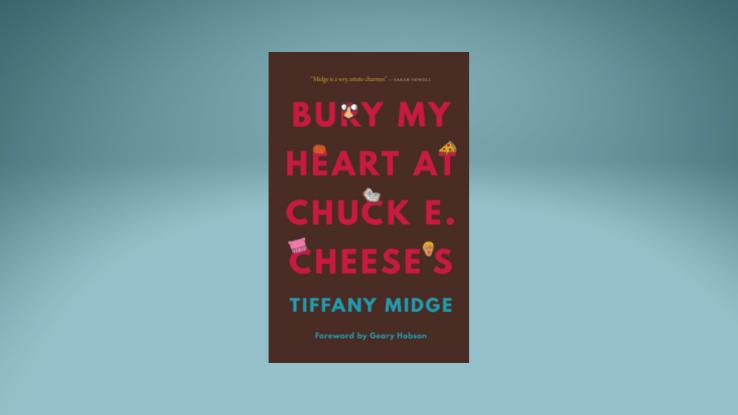
Bury My Heart at Chuck E. Cheese'southward is composed of standalone musings, only all of the passages add up to a unified whole, all while "driv[ing] a spear into the stereotype of Native American stoicism," as David Treuer, writer of The Heartbeat of Wounded Knee, puts information technology. Honest, moving, and rife with satire, this book gives David Sedaris' best a run for its money.
"At that place There" by Tommy Orange
Heralded as one of the best novels of 2018 by The New York Times Book Review, NPR, the San Francisco Chronicle and others, Tommy Orangish's There In that location is a "vivid, propulsive" (People Magazine) bestseller. The volume centers on 12 characters, all of whom Orange calls "Urban Indians," living in Oakland, California.
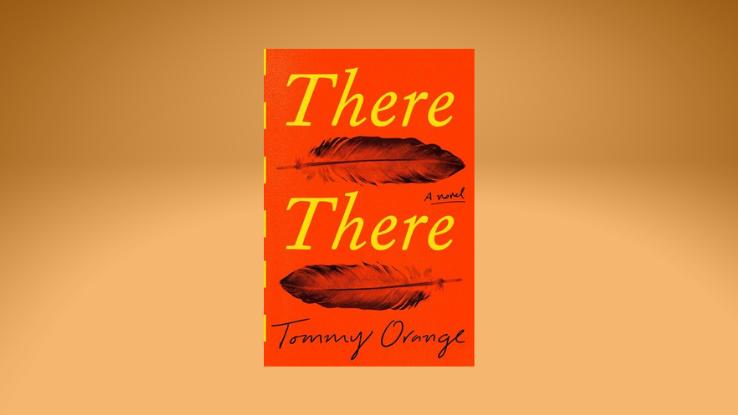
These characters' distinct stories (and lives) end upwards colliding on one fateful day. Despite grappling with several centuries' worth of pain, Orange also infuses the text with sense of humour and dazzler. Without a doubt, In that location There is a modern archetype — and almost-incommunicable to put down once you showtime reading it.
"Abandon Me" by Melissa Febos
Winner of the Lambda Literary Jeanne Cordova Prize for Lesbian/Queer Nonfiction, Abandon Me centers on author's need for connection. This incredibly vulnerable collection of memoirs sees Melissa Febos examining her own journey of self-discovery, which is marked by both passion and obsession.
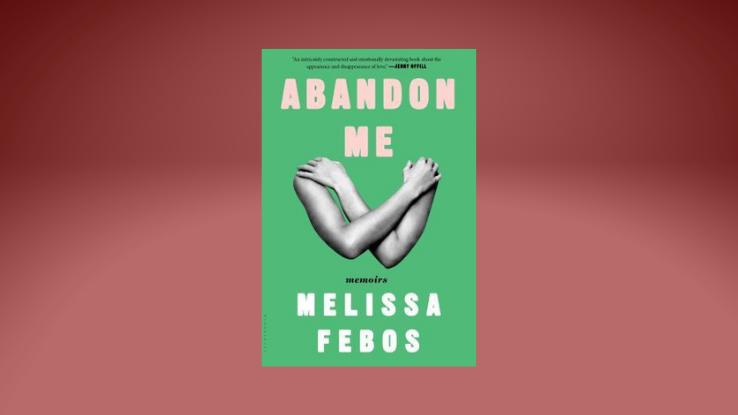
In reference to the titular story, The Chicago Review of Books notes that the "memoir is the map" — i that helps us understand Febos, even if the on-page version of her is lost. In fact, Febos is peculiarly deft at exploring the simultaneous thrill and fear that come up along with losing yourself in some other person — or people.
"Black Indian" by Shonda Buchanan
For equally long as Shonda Buchanan can remember, she has cherished her multi-racial heritage. At the same time, Buchanan and her family suffered — not but because of America's ongoing racism and ostracizing attitudes, just because there was and then much they didn't know most their past.
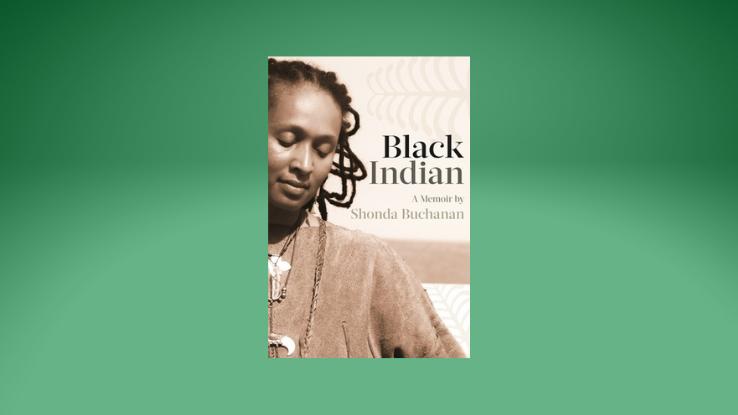
In this searing memoir, Buchanan digs into her family'southward past, exploring what it ways to be an African American person, an Ethnic person — and a Black Indigenous person. While her search for truth may not encapsulate the experiences of all biracial folks, Buchanan's story deeply resonates due, in role, to its specificity and the way the author openly shares her lived experiences.
"We Are Water Protectors" by Carole Lindstrom
"Water is the first medicine," reads We Are Water Protectors. "It affects and connects united states of america all." Inspired by the myriad Indigenous-led movements happening across Northward America, this scenic picture book is a sort of call to action, wrapped in lyrical prose and watercolor illustrations crafted by #OwnVoices writer Carole Lindstrom and artist Michaela Goade.
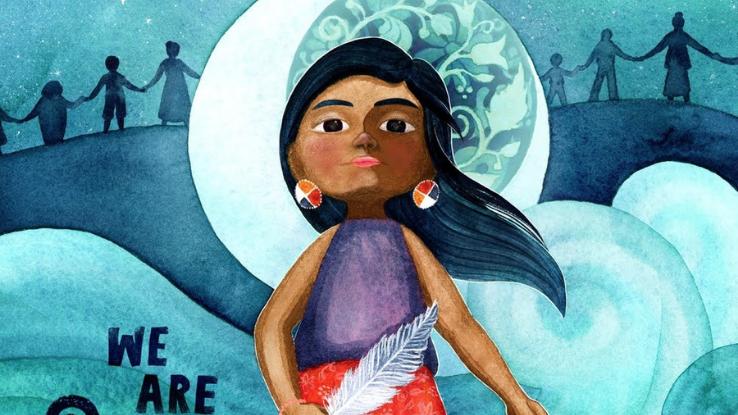
Booklist notes that the volume was "written in response to the construction of the Dakota Access Pipeline [and] famously protested by the Standing Rock Sioux Tribe" and that "these pages carry grief, but it is overshadowed by hope in what is an unapologetic call to action." No thing one's age, We Are H2o Protectors is a must-read, i that gets to the heart of the things that matter and puts Indigenous ideas, groups, creators and leaders rightfully at the center of the movement to safeguard our planet from human-caused climate change and destruction.
"As Long As Grass Grows: The Indigenous Fight for Environmental Justice, From Colonization to Standing Stone" by Dina Gilio-Whitaker
While Indigenous activists take always led the fight for climate and environmental justice, their efforts take get more widely acknowledged by media, the federal government and allies. From the Standing Rock protest to #StopLine3, these fights are far from over — and they're happening all across the land.
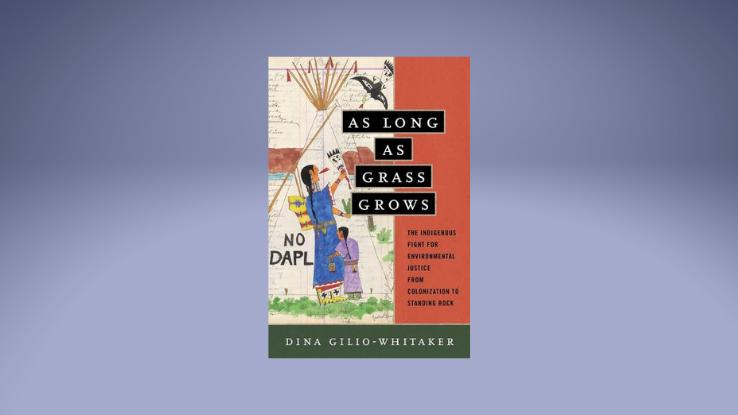
Inspired by these fights, Indigenous researcher and activist Dina Gilio-Whitaker authored As Long as Grass Grows: The Indigenous Fight for Environmental Justice in 2019. In the text, Gilio-Whitaker explores the ways the federal government has violated tribal treaties, destroyed the land it stole, and made food and water inaccessible to many native peoples. Additionally, the volume highlights the leadership of Ethnic women in these fights for environmental justice.
"Optics Bottle Dark with a Mouthful of Flowers" by Jake Skeets
Selected every bit the Best Poetry Book of 2019 past the likes of Electric Literature, Entropy Mag, Auburn Artery and others, Eyes Canteen Dark with a Mouthful of Flowers is a masterful collection. The publisher calls Jake Skeets a "dazzling geologist of queer eros" — and that certainly feels like an apt clarification.
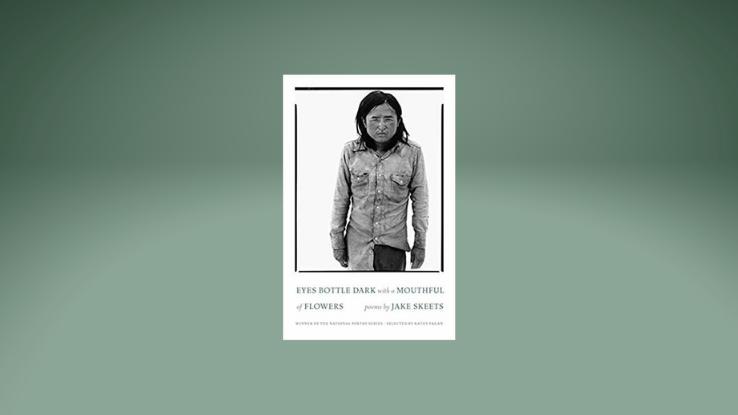
In the book, "Drunktown, New United mexican states" has been shaped by violence — not merely the violence that occurs there, only the violence done to it. Skeet writes that "the closest men get is when they are covered in claret / or cypher at all" in this town. This committed portrait of a place that's been ravaged and forgotten as well highlights the resilience of the people who live there — and the desire to repossess what's been taken.
"The Beadworkers: Stories" by Beth Piatote
Called a "poignant and challenging wait at the manner the past and present collide" by Kirkus Reviews, Beth Piatote's debut story collection, The Beadworkers, is gear up in the Native Northwest. From the Battle of Wounded Articulatio genus to the Fish Wars of the 1960s, many of the stories in the drove stem from, or meditate on, events from the by.
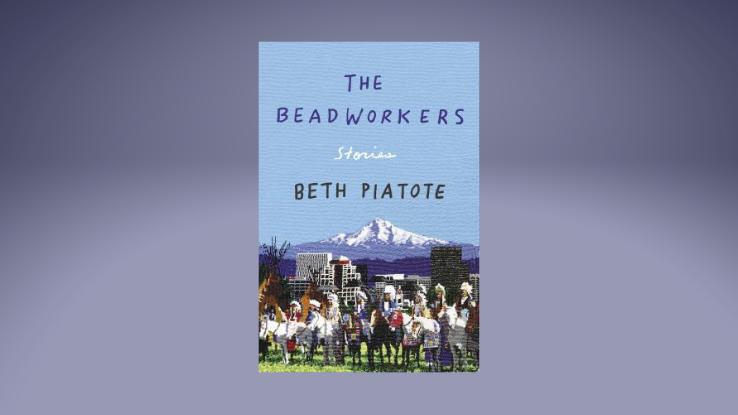
One of Piatote's narrators notes that, "it's surprising how much material can be mined from making Indian versions of things" and, in other stories, Piatote does just that, retelling classical stories, like Sophocles' Antigone, from an Ethnic perspective. With vibrant characters and a beautiful mix of both verse and prose, Piatote'due south debut is a must-read collection — and we tin't wait to read more than of her stories in the future.
"The But Good Indians" by Stephen Graham Jones
Stephen Graham Jones (Ledfeather) wrote 1 of the 2020'south nigh highly predictable horror novels — and all that anticipation certainly paid off. The Only Good Indians centers on the tale of four childhood friends who grow up, motility away from home and and then, a decade later, discover that a vengeful entity is hunting them for an human action of violence they committed long ago.
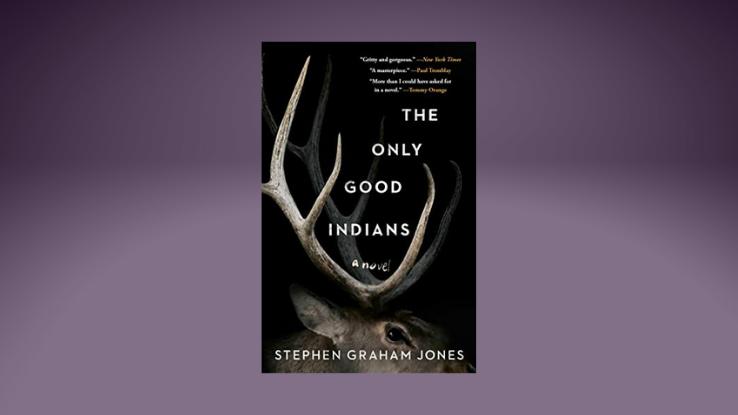
The novel combines horror, drama and social commentary quite flawlessly, proving NPR'south statement that "Jones is one of the best writers working today regardless of genre." Rebecca Roanhorse, the bestselling writer of Trail of Lightning, wrote that "Jones boldly and bravely incorporates both the hard and the beautiful parts of contemporary Indian life into his story, never once falling into stereotypes or easy answers simply also not shying away from the horrors caused by cycles of violence."
"An Indigenous Peoples' History of the United states of america for Young People" by Roxanne Dunbar-Ortiz
Undoubtedly, understanding our collective history is essential to understanding our present. For example, the movements to abolish Columbus Twenty-four hours or end Line 3 stem from how the commencement colonizers treated Native people and the land we all live on today. Today, there are more than 500 federally recognized Ethnic nations; roughly iii million people comprise these nations, but, before the centuries-long genocide by white colonizers, 15 1000000 Ethnic people lived on land that'southward the present-twenty-four hour period U.Due south.
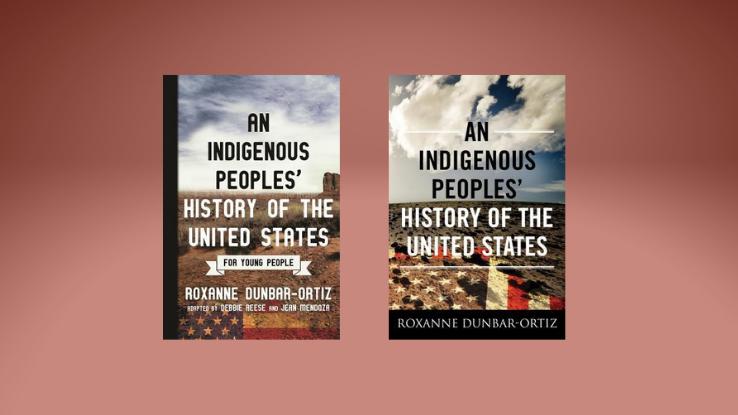
In An Indigenous Peoples' History of the United states of america, historian and Indigenous rights activist Roxanne Dunbar-Ortiz tells the story of the U.Due south. empire's rise from an Ethnic perspective — a landmark first. Dunbar-Ortiz'south 2015 bestseller was later adapted, with the help of Jean Mendoza and Debbie Reese, into a book aimed at middle-course and young-adult readers.
Whether y'all're reading i of these books yourself or looking to outset a discussion with younger students, these texts allow readers to call up critically and examine the way we learn virtually our history. Filled with archival images and maps, An Indigenous Peoples' History of the United States for Young People does an exceptionally proficient job of highlighting 400 years of Indigenous peoples' resistance and resilience in the fight against colonialism.
"Streaming" past Allison Adelle Hedge Coke
Honour-winning poet Allison Adelle Hedge Coke explores loss, retentivity and the futurity of our planet in this multi-award-winning collection. Joy Harjo, the U.Due south. National Poet Laureate, noted that the poems in Streaming are "the songs of righteous anger and utter dazzler."
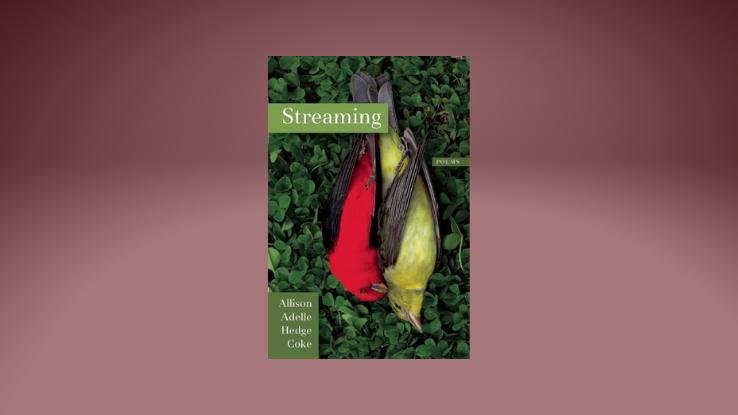
Lauded for her musicality, Hedge Coke uses structure and imagery to bang-up effect, crafting poems that are singular. "Hedge Coke uproots the society of poetry and song," Jennifer Martelli writes in Green Mount Review "— or, she finds its massive roots deep beneath the soil of America."
"Feed" by Tommy Pico
Tommy Pico has won the Whiting Laurels, an American Book Award, and was a Lambda Literary Award finalist. Now, Feed completes his Teebs Bike, a series of iv books. This riveting collection is ambitious, to say the least, and tackles everything from pop culture to food to being friends with your ex.
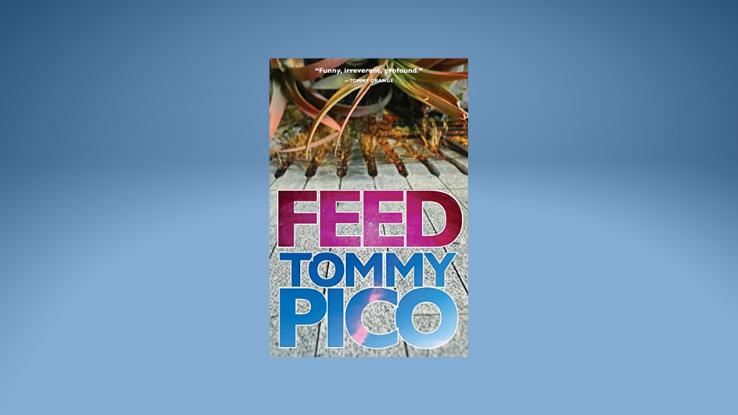
Shelf Sensation called it "a dazzling fusion of culture," noting that "Feed is as much about what we swallow as how nosotros consume. Pico's lines are ever-growing, ever-expanding. And while we might seem lost in the abundance, the sheer variety, Pico is a skilled enough poet to ground us."
Source: https://www.ask.com/culture/books-by-indigenous-writers?utm_content=params%3Ao%3D740004%26ad%3DdirN%26qo%3DserpIndex
0 Response to "Best Authors to Read to Improve Vocabulary"
Publicar un comentario